Atelier notes — Terminology — 5 min
Guayabera vs Chacabana: What Is the Difference?
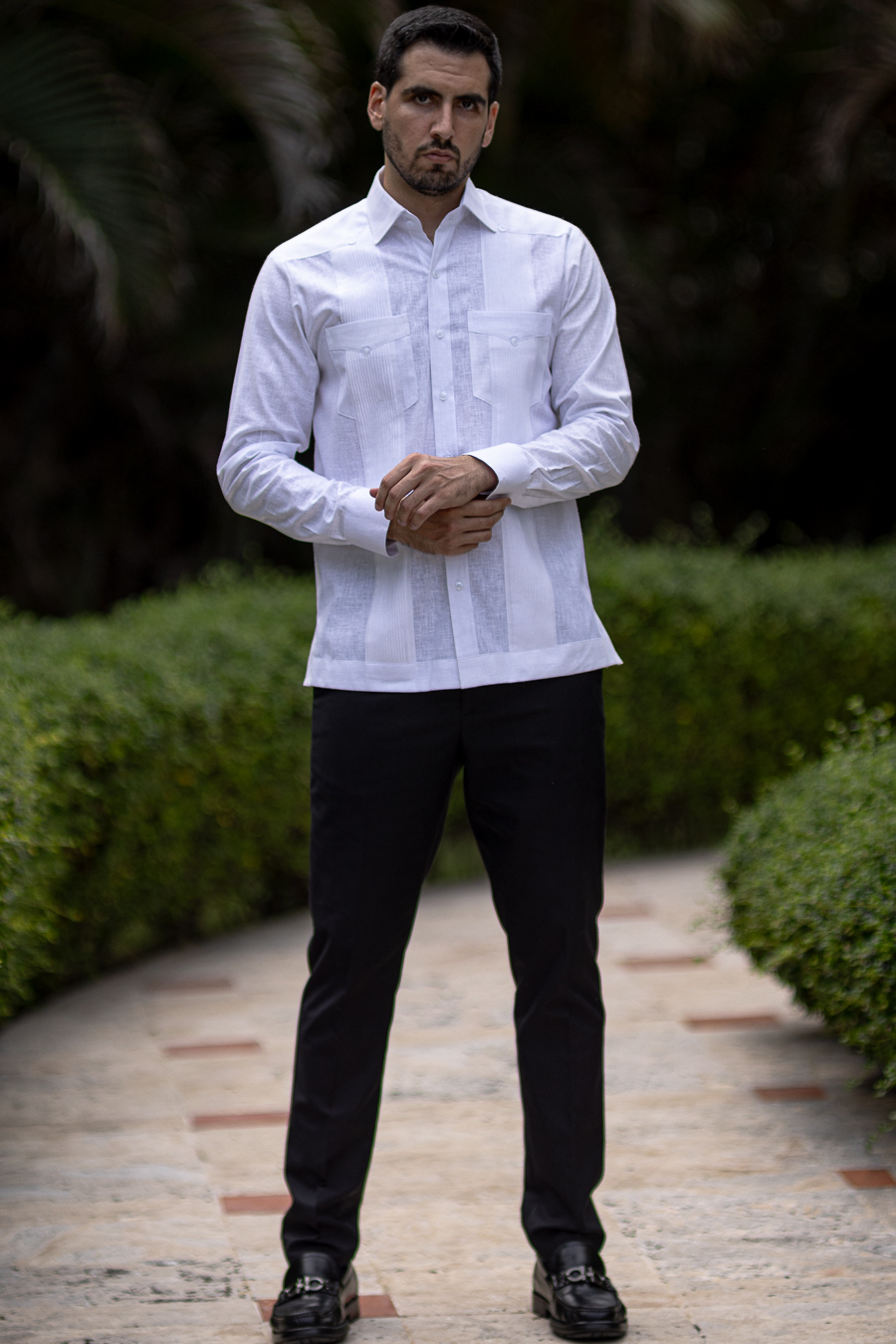
Customers ask for a guayabera in Miami and a chacabana in the Caribbean, and most of the time they are describing the same garment: a men's linen shirt worn untucked, with vertical pleats running down the front and back, and patch pockets.
Same shirt, two names
Guayabera is the term used across Cuba, Mexico, the southern United States and most of the export market. Chacabana is the term used in the Dominican Republic and parts of Puerto Rico, and it usually points to the dressier reading of the same shirt.
There is no technical standard separating them. What matters when you order is the construction: pocket count, pleat treatment, collar, and whether the shirt is cut for formal wear or for warm-weather ease.
Where the cut usually differs
A chacabana, in Dominican usage, tends to be cleaner: fewer decorative details, a crisper collar, straighter body, and it is what men wear to a wedding, a baptism or a business lunch.
A guayabera in the classic Cuban reading leans more ornamental — embroidery or alforza pleating on both front panels, four pockets, side vents at the hem.
How COSTAPALMA builds it
Every piece is cut in 100% linen or a linen blend, with pleats pressed rather than stitched flat so the panel keeps its movement. Pockets are aligned to the pleat lines, and the hem is finished straight so the shirt reads intentional worn out.
We use both words on the site because clients search with both. When you order, you choose the fabric, the sleeve length and the size — or send your measurements and we cut to them at no extra cost.
Which one should you order?
If the occasion is formal — a wedding, a ceremony, a business setting — choose 100% linen in white or a soft neutral, long sleeve. If it is a resort, a dinner or daily warm-weather wear, a coloured linen blend in short sleeve is the easier piece to live in.